Duncan Townson
1927-2023
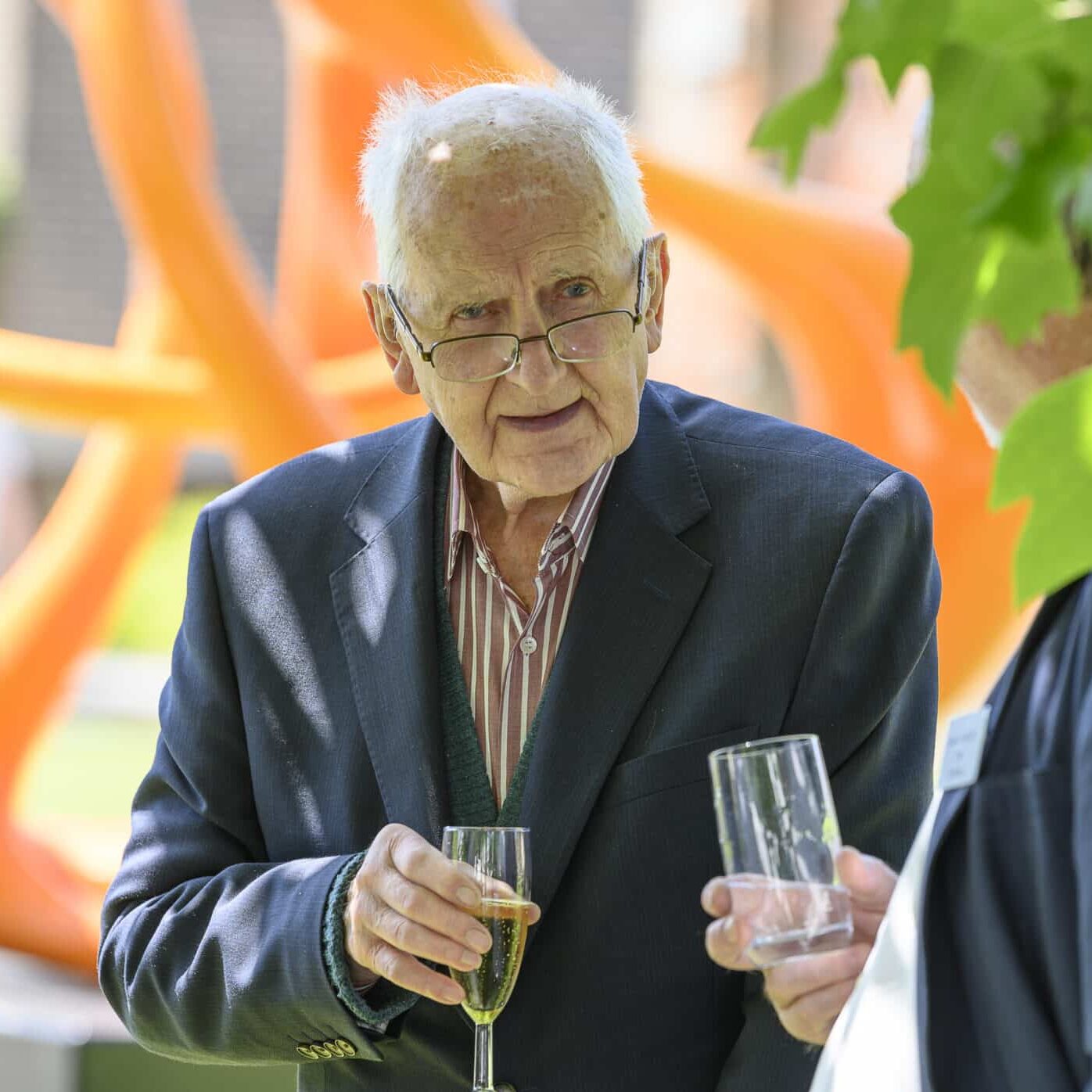
Duncan Townson was for generations of Sevenoaks students a deeply influential, inspirational figure. It is no exaggeration to say that those who read History at university seldom experienced better teaching. Cambridge historian, Housemaster of Park Grange, author, Yorkshireman, cricketer, opera lover, he served between 1952 and 1987 under five headmasters. Penetratingly intelligent, direct of speech, he respected those who aspired to similar levels of professionalism, honesty and intellectual rigour.
Second-rate historians, fraudulent politicians and many English cricketers he dismissed as ‘clowns’. For him, history involved voracious reading, critical rigour and an impressive openness to new ideas: 60 years ago he and Kim Taylor pioneered a cross-curricular, global syllabus, PEB (Predicament, Experience, Belief), that opened young eyes to prehistory, the rise of civilisations and the great empires; occasionally idiosyncratic in his selections for study, he once dismissed a plea for more time to be given to the Roman Empire with, ‘Not important.’ His knowledge of Russian history, particularly the October Revolution, was close to intimidating, although the Sixth Formers he taught for an A-level special subject were indeed privileged. Equally impressive was his knowledge of the French Revolution, his book upon which became a standard text. Duncan was Housemaster of Park Grange for many years, and with his wife Lesley and their children created a warm and caring boarding community; utterly straightforward and fair, he stood up for his boys but expected high standards of them. It was during this time that he and the family set off on summer-long expeditions to Morocco and, notably, Iran. In retirement he was commissioned by Penguin to write two dictionaries: Modern History 1789-1945 and Contemporary History: 1945 to the Present, as well as Breve historia de Inglaterra for Spanish readers. In his mid-90s, his reading ranged from the latest book on the 1848 Revolutions to a scholarly comparison of Spanish and Aztec civilisations.
Above all, Duncan was a good friend to so many colleagues, students and former students, some of whom went on to distinguished academic careers. If I think of Duncan, it is of him playing for the Orbillians cricket team, drinking in the Oak Tap (the ever-increasing price of a pint was a constant preoccupation), of his intellectual passion and of his love of opera and art. He was at Sevenoaks at a time of immense change and embodied so much of what many regard as the essence of the school.