Since the mid-20th century Sevenoaks School has been fortunate to have had a series of leaders whose vision and innovation have shaped it into the world-leading IB school it is today. Each Head received a rich legacy from their direct predecessor and other Headmasters, from our first known Schoolmaster, Thomas Hales, in the 1490s, to today. Here we share the impact and legacies of former Headmasters Kim Taylor, Alan Tammadge, Richard Barker, Tommy Cookson, and Head Katy Ricks.
KIM TAYLOR
Headmaster 1954 to 1968
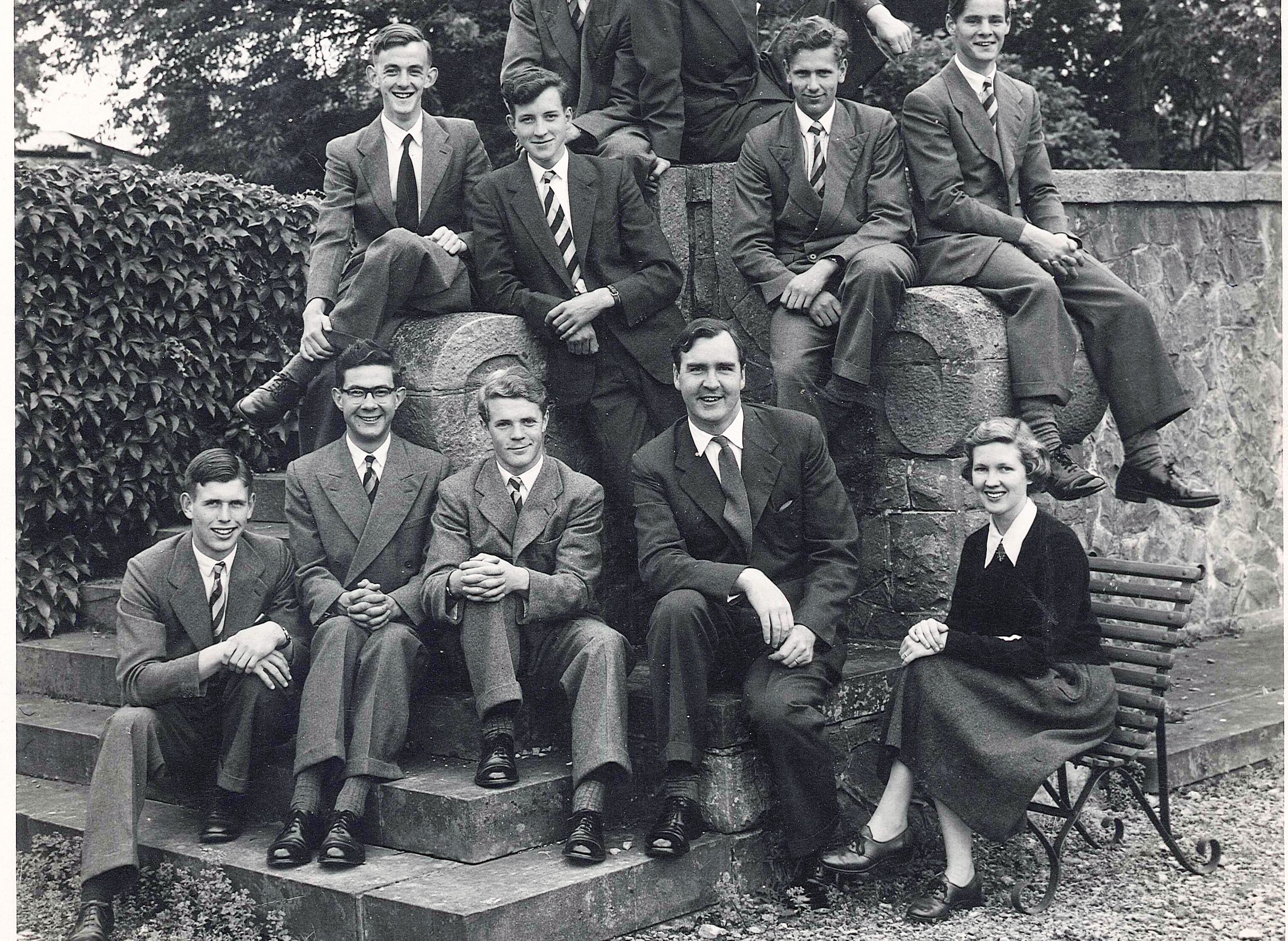
Leonard Clive (Kim) Taylor was born in Calcutta and joined Sevenoaks as a pupil in 1932 aged 10. This began a lifelong association with the school as a student, Headmaster and Governor. Kim was Head of History at Repton when he was invited by his former headmaster to succeed him at Sevenoaks, making him the youngest headmaster of a public school aged just 32.
Kim Taylor was an educational innovator and transformed Sevenoaks with his modern ideas, described in the book ‘Experiments in Education at Sevenoaks’ (1965). As Headmaster, and later a Governor, he balanced a knowledge and love of the school’s traditions and past with the imagination to transform it and create the foundation on which the present school exists. The Report of HM Inspectors in 1960 spoke of a ‘gifted Headmaster [whose leadership] can only be called distinguished’. It noted that he was an exceptionally fecund innovator whose ideas were not sparks that fizzled and died.
During Kim’s energetic 14 years as Headmaster the keys to a Sevenoaks education were people and ideas. Among his innovations were: the 3L French Exchange with St Martin Pontoise, an ambitious experiment in language learning; a modernised curriculum with PEB (Predicament, Experience, Belief), a combined course of History, Geography and Religious Studies; the introduction of jazz and folk music; VISTA for engineering and scientific principles through experiments and model-making; and the International Centre in 1962, an enduring pioneer experiment in international education. Kim was also responsible for improving the school’s resources including science laboratories in 1957, the Little Theatre in 1962, a new Art Room and Dining Hall, and the Aisher Hall in 1963.
Many of his experiments became part of mainstream education, including VSU (Voluntary Service Unit), the precursor to Service which is embedded in the school’s curriculum today. An article in New Society in October 1965 noted that ‘The idea of weaving the school into the life of the community is one of the headmaster’s constant preoccupations’ and that VSU at Sevenoaks was ‘distinguished by its scale and the care with which it is planned’.
A plaque honouring Kim Taylor hangs on the wall at Claridge Lawn, above the bench in commemoration of his wife Suzanne.
ALAN TAMMADGE
Headmaster 1971 to 1981
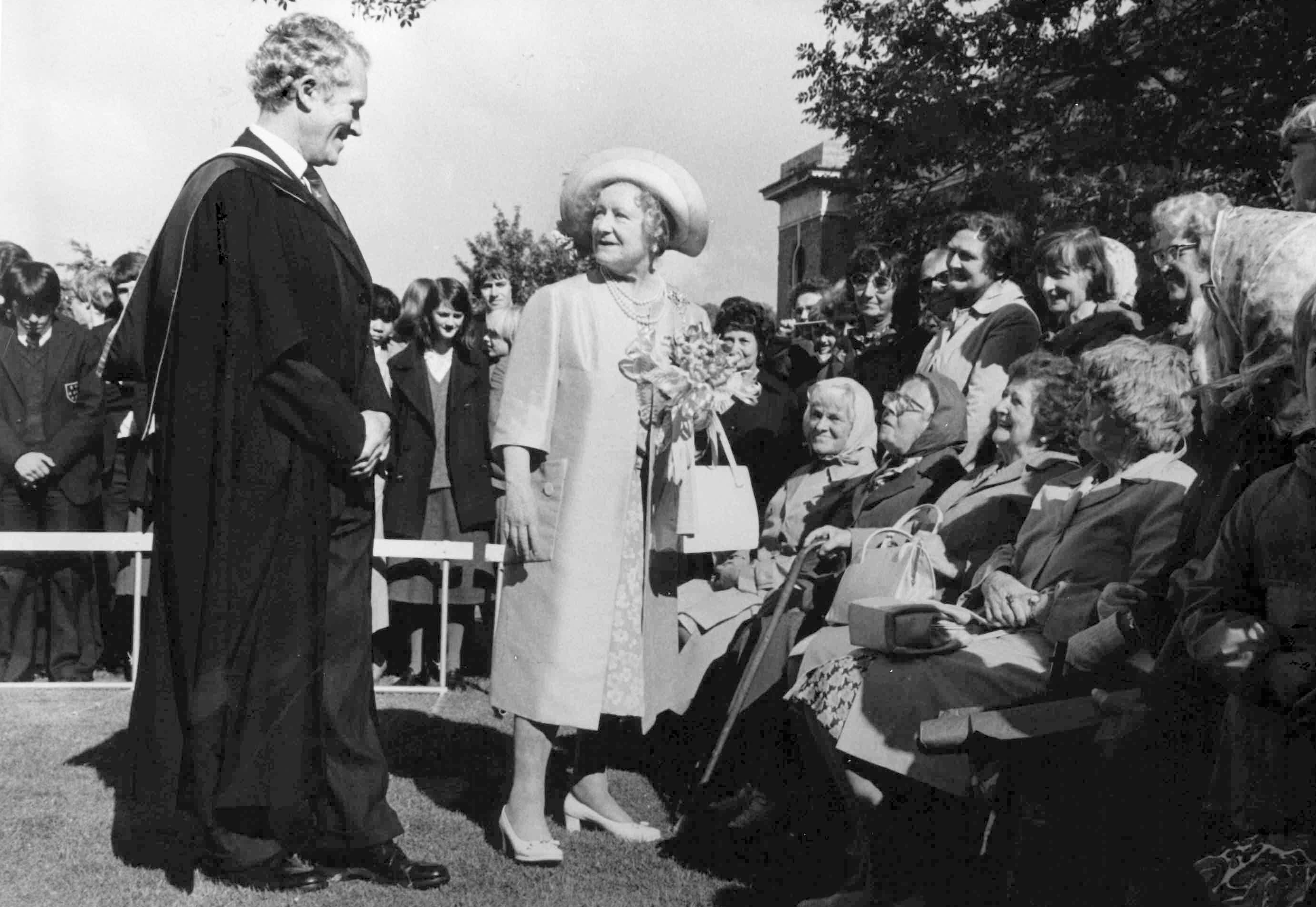
Alan Tammadge was appointed Headmaster in 1971 and led the school with careful strategic thinking and quiet authority. He came to Sevenoaks from Magdalen College School, Oxford, and built on the initiatives of his predecessor Kim Taylor.
Alan was Headmaster during a very exciting time of significant change for Sevenoaks. He realised the importance of creativity in education and key decisions were taken that continue to influence the school today. It was Alan who began Sevenoaks School’s transformation into a fully co-educational school, introducing girls to the Sixth Form in 1976 and opening the Girls’ International House to the first female boarders in 1977. In 1978 the International Baccalaureate was introduced, as an option against A-levels, reflecting the school’s international aspirations.
Alan also oversaw a period of generous donations which significantly improved the school’s academic and recreational facilities. These included new Biology labs in 1972, conversion of The Johnson Hall into the Johnson Library in 1975, the Marley Sports Hall opened in 1977 by the Prince of Wales, and the Sackville Theatre in 1981.
Alan and his wife, Rosemary, did much to cement the ties of friendship between the town and the school; he had an acute sense of the school’s responsibility to the community, offering use of its resources to local organisations. He had a significant influence over the decision to build a theatre rather than a swimming pool at the school in the 1970s, arguing that the former would support relations between the school and the town following the growing popularity of the Sevenoaks Summer Festival.
Brian Scragg wrote in the Annual Review 1980-81, ‘Alan Tammadge is not in fact an easy man to praise. Not that he hasn’t qualities and virtues aplenty, but they are seldom dramatically paraded; indeed, more often than not they are actively dissimulated behind that familiar modest, slightly lop-sided smile and a quizzically raised eyebrow.’ He went on to acknowledge the ‘great deal of unostentatious hard work, he [Alan] has deployed at Sevenoaks. We shall long be grateful.’
In June 2024 we had the pleasure of hosting Alan’s family including his son Anthony who said, ‘It was really moving to me, and I think my father would have been overwhelmed to think he was still regarded so highly.’
RICHARD BARKER
Headmaster 1981 to 1996
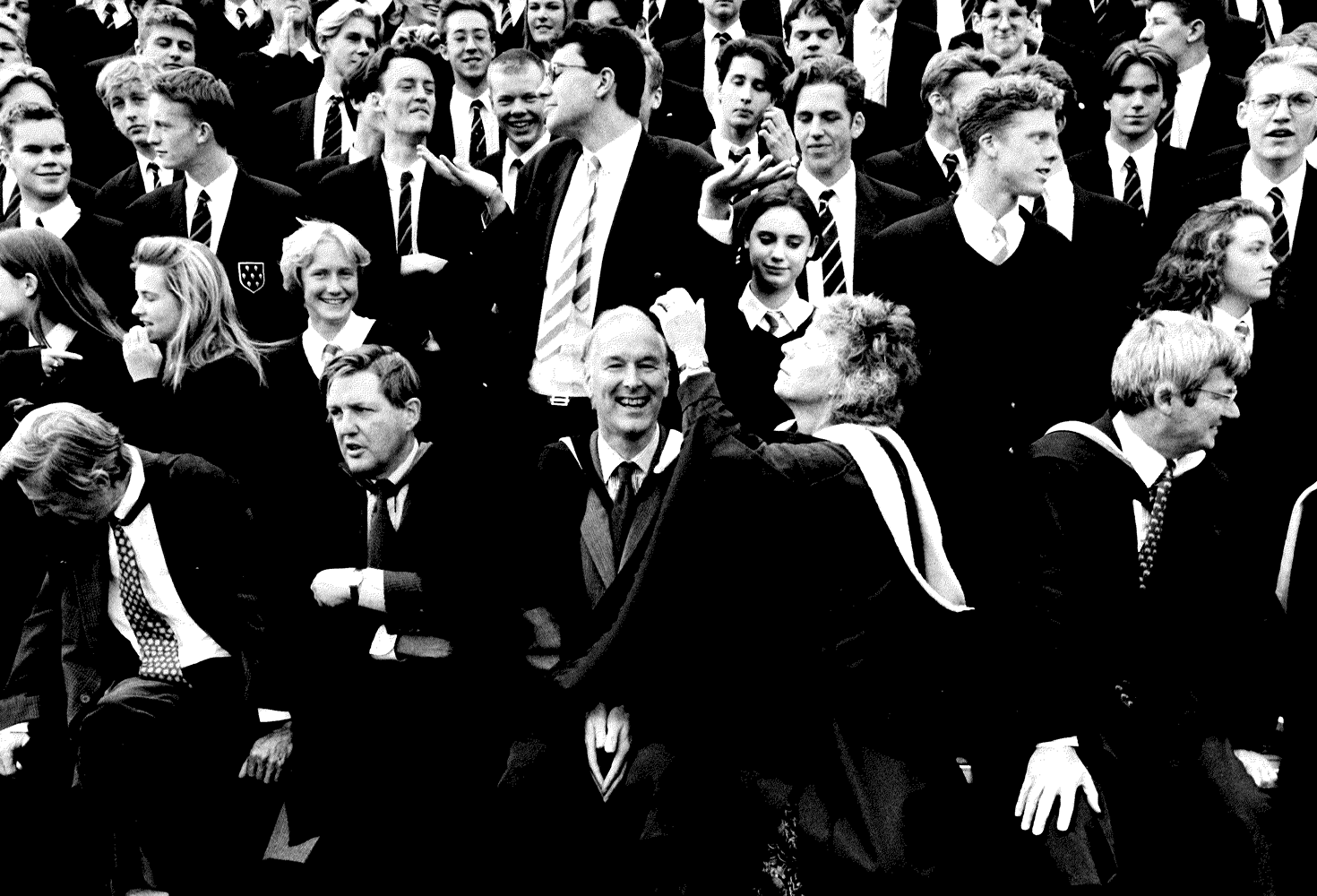
Richard Barker succeeded Alan Tammadge, having previously taught at Bedales and Marlborough College. From 1966 he had also pioneered a Business Studies A-level, considered a cutting-edge development in education.
Sevenoaks already had a reputation for innovation. As a moderniser with a new ‘management approach’ and strong grasp of business Richard Barker was a good fit. John Guyatt wrote in Richard’s obituary, ‘It was an exciting, almost turbulent time. Richard wanted change and he wanted it fast: co-education…new buildings, tennis, the Summer Festival, the IB: all were enthusiastically pushed forward. Decisive, firm, always courageous, ideas tumbled out of him’.
Richard Barker is credited with creating a heterogeneous school. Four years prior to his arrival Sevenoaks had been the first HMC school to offer the IB Diploma and he enthusiastically publicised its merits as a broad, rigorous and challenging programme. By the time he left Sevenoaks, half the Sixth Form were choosing it instead of A-levels – even though many people in England were unaware of the qualification – and the school’s overall academic reputation had improved. Richard Barker also recognised the advantages of co-education and international students; the school went fully co-ed in 1984, and he championed investment in boarding including Sennocke House in 1986. Among his other achievements were much improved sporting standards and an emphasis on co-curricular opportunities for everyone.
In terms of the campus, Richard Barker oversaw significant development during his 15 years. As well as repairing the damage done by the Great Storm of 1987, he was clear the school needed the very best facilities for it to flourish and be considered one of the best independent schools in the country. This involved a huge re-landscaping of the campus, a new Science, Electronics and Computing Centre in 1988, the Bailey Tennis Centre in 1989, extending the Aisher Hall in 1990, and Claridge House in 1992.
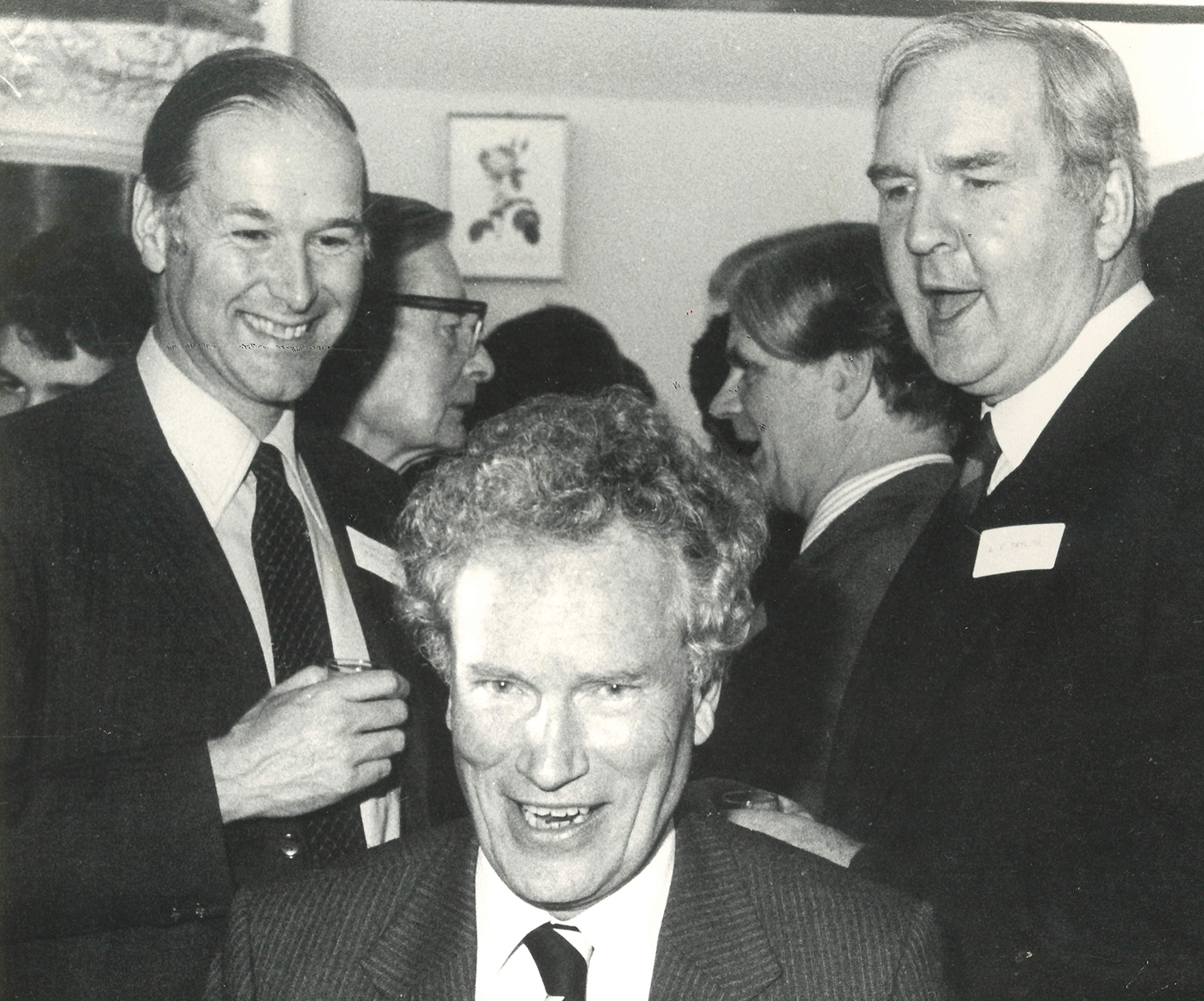
While at Sevenoaks, Richard Barker was greatly supported by his wife Imogen who we were delighted to see in June for the Retired Staff Lunch. She is pictured at the event alongside John Guyatt and Tommy Cookson who, on his appointment as Headmaster in 1996, noted Richard Barker’s ‘dedication, shrewdness and foresight which had carried the school to new heights’.
TOMMY COOKSON MBE
Headmaster 1996 to 2002
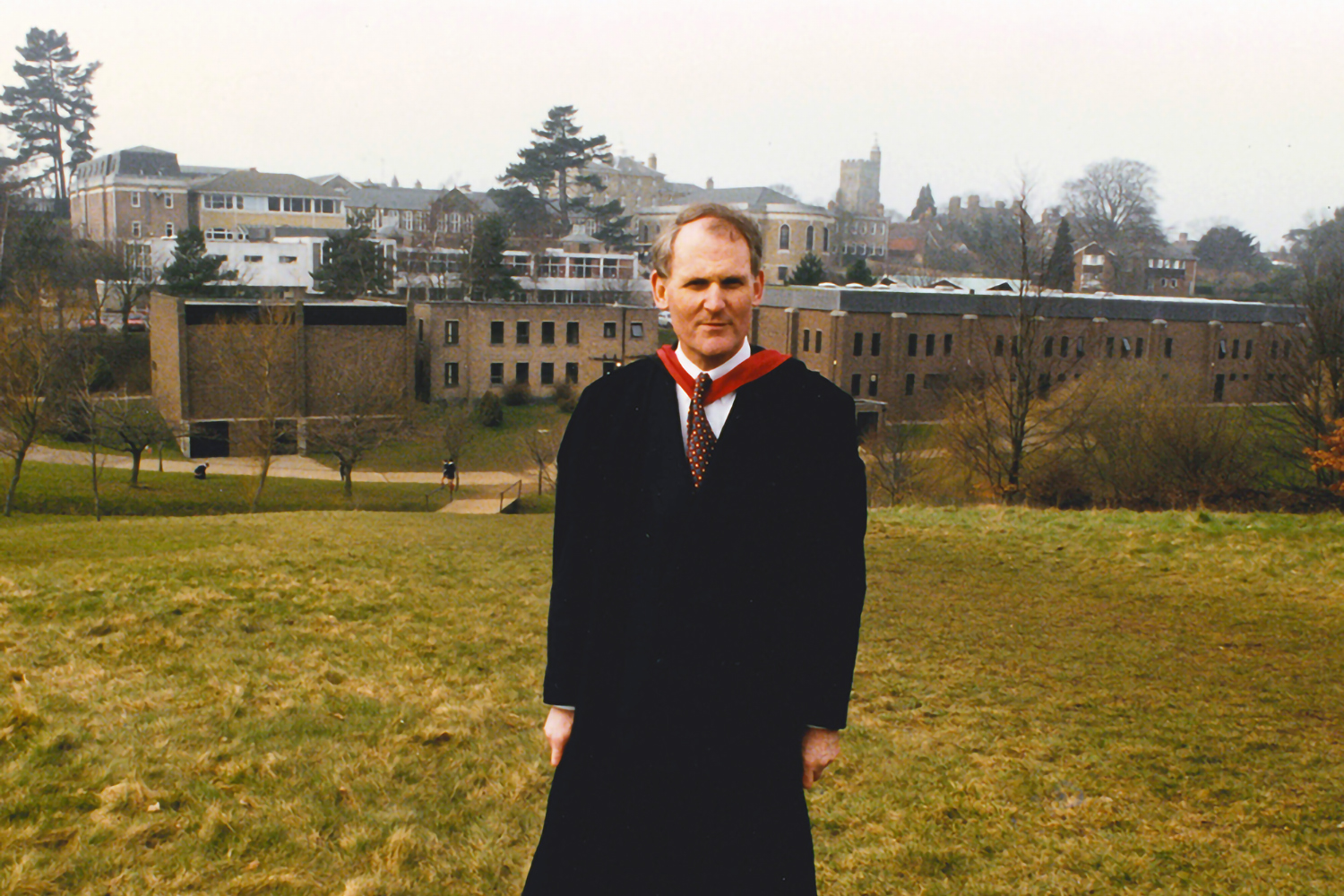
A few years into his headship, Tommy Cookson made Sevenoaks front-page news (and inspired a cartoon in The Times) because of the momentous decision to go all-IB. Backed by the Governors, he did so in the belief that the underlying philosophy of the IB suited Sevenoaks students and provided the best preparation for university and beyond. Tommy described it as ‘a better yardstick of excellence’. That daring decision in 1999 supported Sevenoaks’ reputation for academic innovation and was a considerable turning point in the school’s history. It is a decision the school has never regretted.
Tommy’s six years as Headmaster showed an intense commitment to the true aims of education: to widen and deepen minds, and to stimulate a thirst for learning with a curriculum that provided enough challenge for students in all years. He had a constant insistence on the merits of an international education and was in tune with the school’s global outlook. This included developing and extending the Modern Languages programme through options in the Lower School and extra classrooms, widening opportunities for foreign language exchanges through links with schools in Brussels and Russia, ensuring trips abroad were the norm across subjects and built into the curriculum, and completing the International Centre’s move to its purpose-built home in 1997. Within a few years, Sevenoaks was established as a leading IB school and its worldwide reputation was rapidly rising.
An expanding school with continued growth in student numbers led to the need for more space. School House, which 80 years earlier had housed most of the school, was renamed Old School and became home to a single department (Maths) in 1997. During the late 1990s there was also great success and opportunity across sport, drama and music and in 2000 Sevenoaks was named by The Sunday Times as its Co-educational Independent School of the Year.
Tommy later founded Physics Partners, a Kent-based educational charity, and in 2022 he was awarded an MBE for services to education. He is pictured with the current Headmaster, Jesse Elzinga, this year and remains a passionate supporter of Sevenoaks School and the IB.
DR KATY RICKS
Head 2002 to 2019
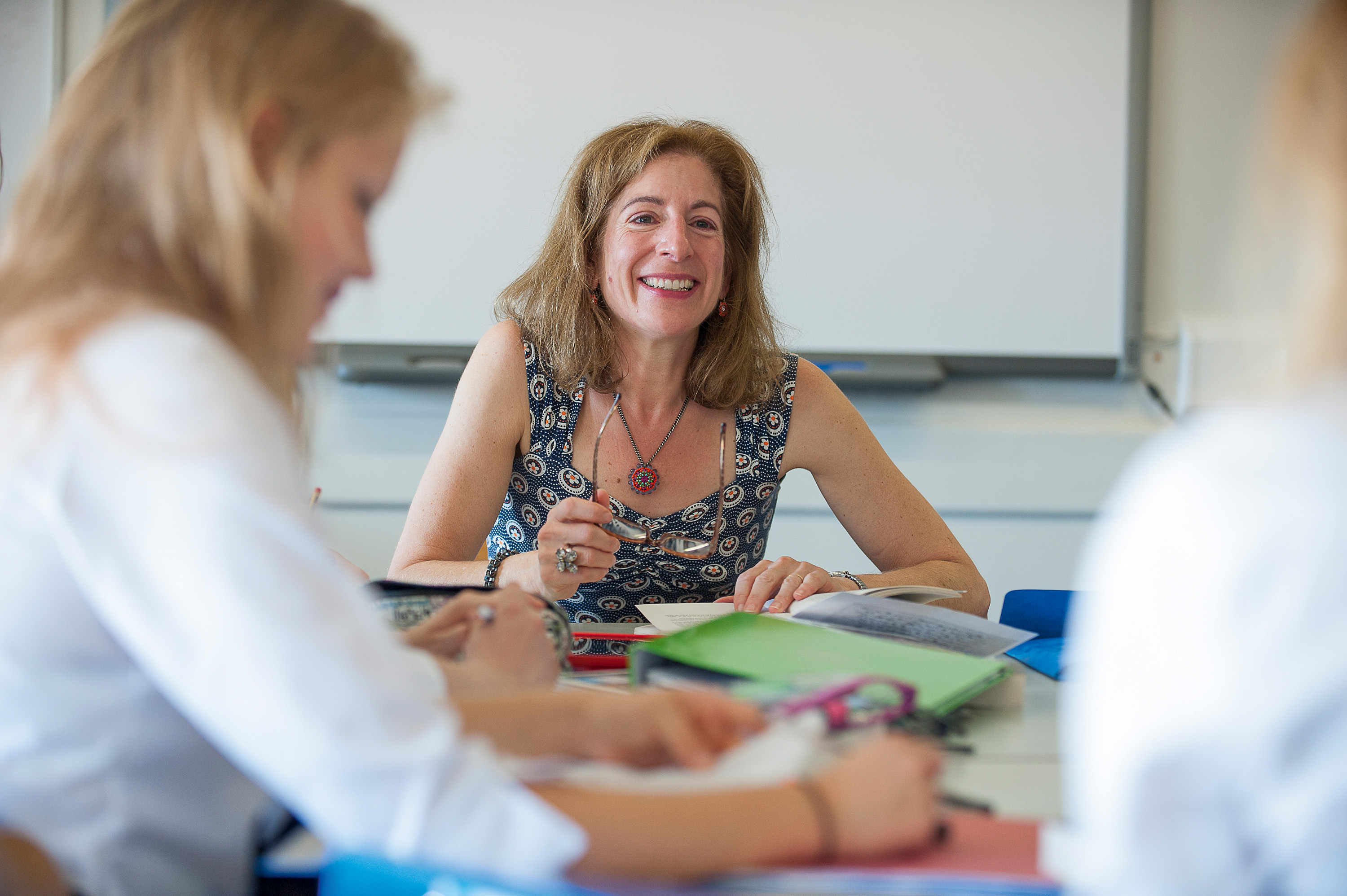
When Katy Ricks was appointed in 2002, she became the first female Head in the school’s history. From the start she brought energy and sensitivity, and modern management and style that were very refreshing.
Although Sevenoaks had prospered over the previous decade there was a need for consolidation. Katy immediately focused on this and it was obvious, by the end of her first year, that she was an exceptional leader. She quickly developed a strategic vision for Sevenoaks; by the end of her second year the Governing Body agreed the first school masterplan in decades. Ian Doherty, Chair of Governors, later referred to “a combination of broad strategic vision with an attention to detail…that is one of Katy’s great strengths, along with her instinct for choosing the right staff”.
During her tenure the school flourished on a global stage, going from strength to strength as a world-leading IB school and gaining, in the words of Robert Sackville-West, “a real sense of self-belief”. Sevenoaks was twice named as The Sunday Times Independent School of the Year and consistently headed academic league tables during Katy’s leadership.
As you walk around the centre of the campus today, it is hard to imagine what it looked like before Katy arrived, when the heart of the school had been a car park known as The Flat. During her leadership, a quadrangle evolved with teaching spaces equal to the best in the world and dedicated to elements of the school’s liberal education – the Sennocke Centre for sport, the Science and Technology Centre, The Space for performing arts and the Brian Ong Global Study Centre to inspire the outward-facing ambition of our educational programme. She believed in spaces to enable students, teachers and staff to meet and intersect in inspiring places, to do things in new ways.
Katy continued to teach English throughout her time as Head of Sevenoaks. As someone who places huge value on learning for its own sake, she took a sabbatical term to complete the DPhil thesis she had abandoned 30 years before for a career in teaching.
It was an absolute pleasure to unite Katy with fellow Heads of Sevenoaks, Tommy Cookson and Jesse Elzinga, earlier this year in Manor House. Read more