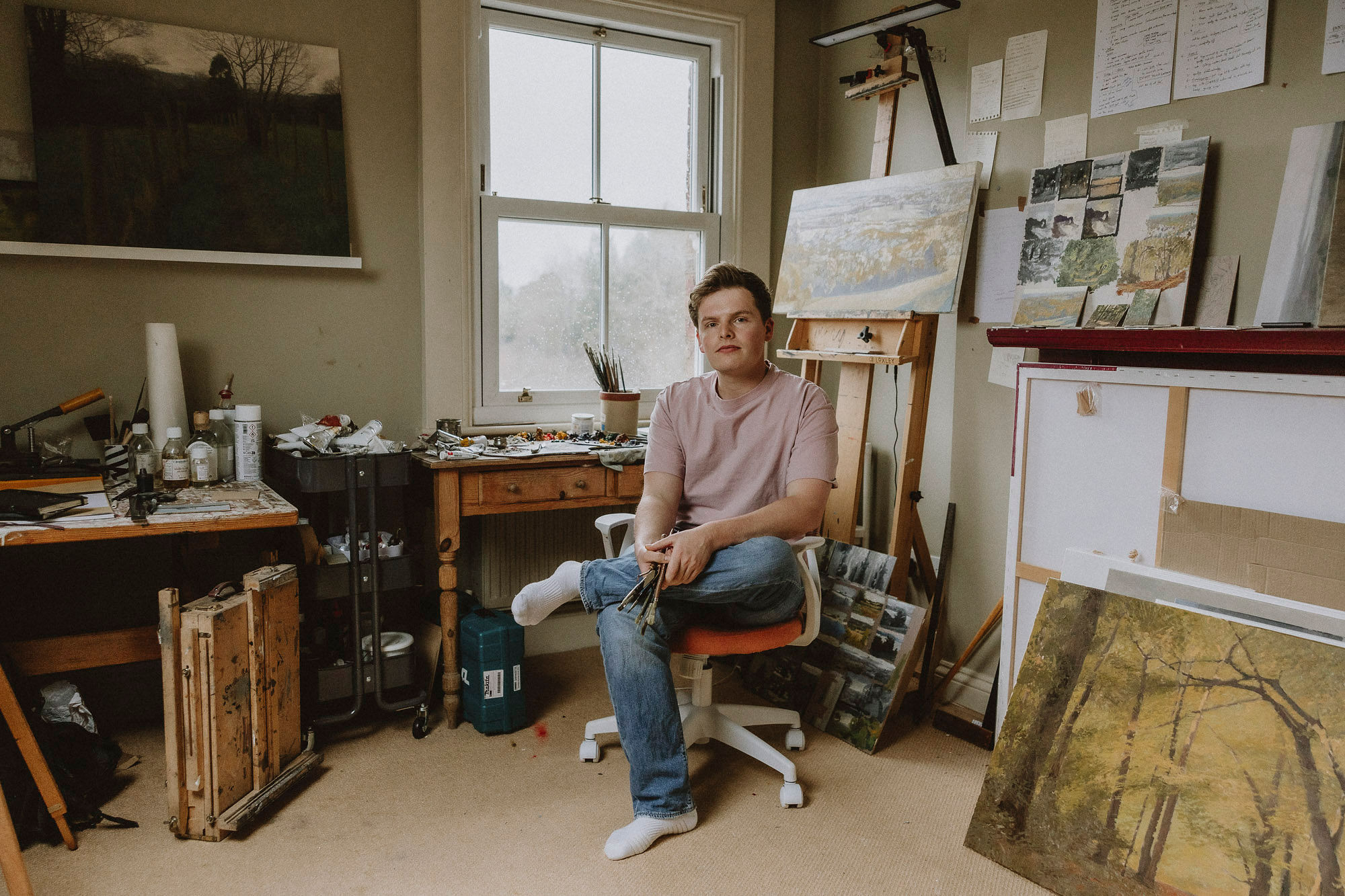
In conversation with:
MAX WHITE (OS 2016)
Max White is the youngest member of the Royal Institute of Oil Painters (ROI) in 100 years, at just 27. Max talks to us about when he first realised his talent as an artist and how he paints mood in his works that have won him several awards.
“It’s a bit like going skydiving in a way. You sort of prepare as much as you possibly can and then the blank canvas is the moment that you’re sitting on the edge of the plane. You then sort of throw yourself out of it.”
How would you describe yourself as an artist?
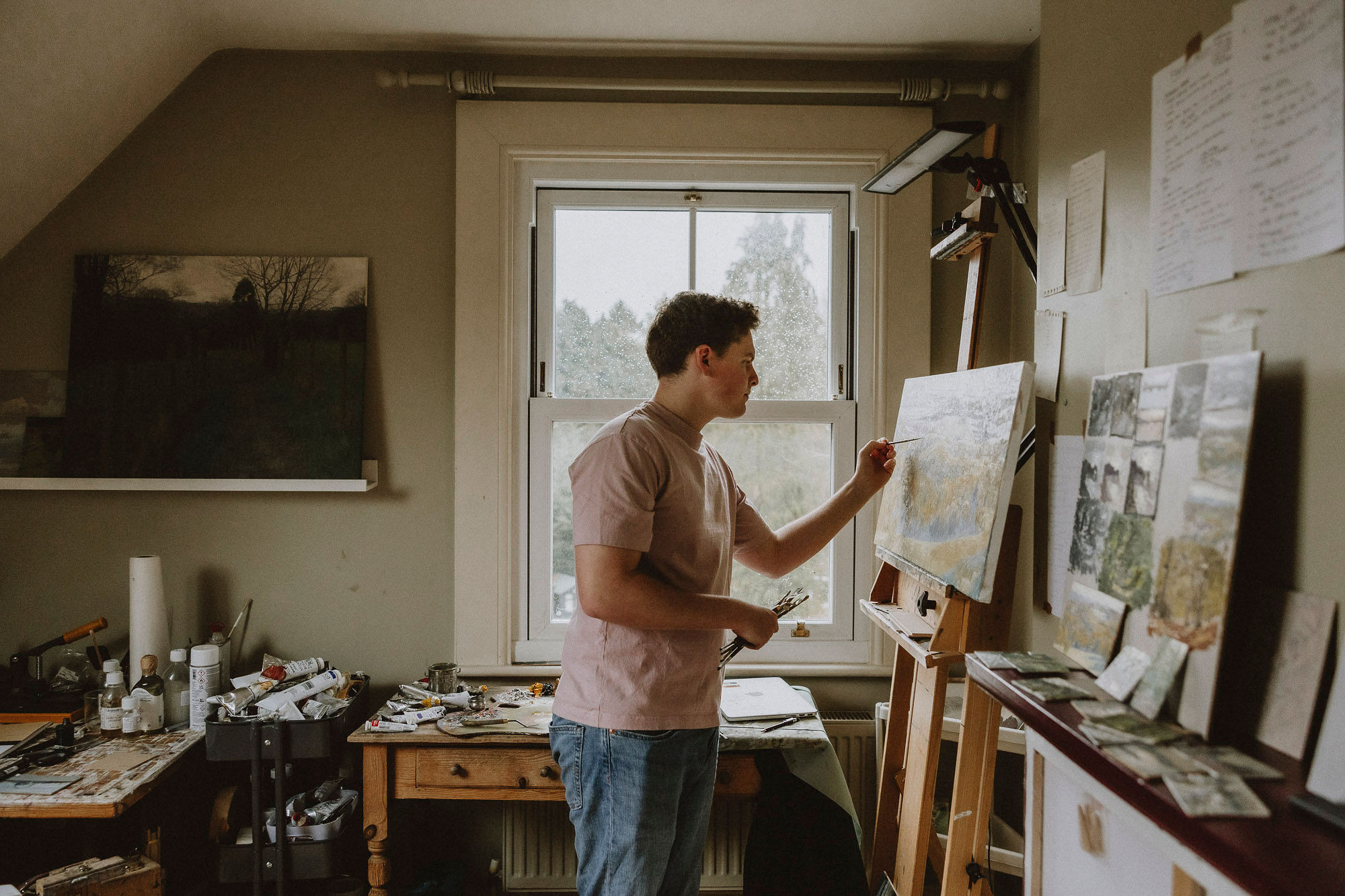
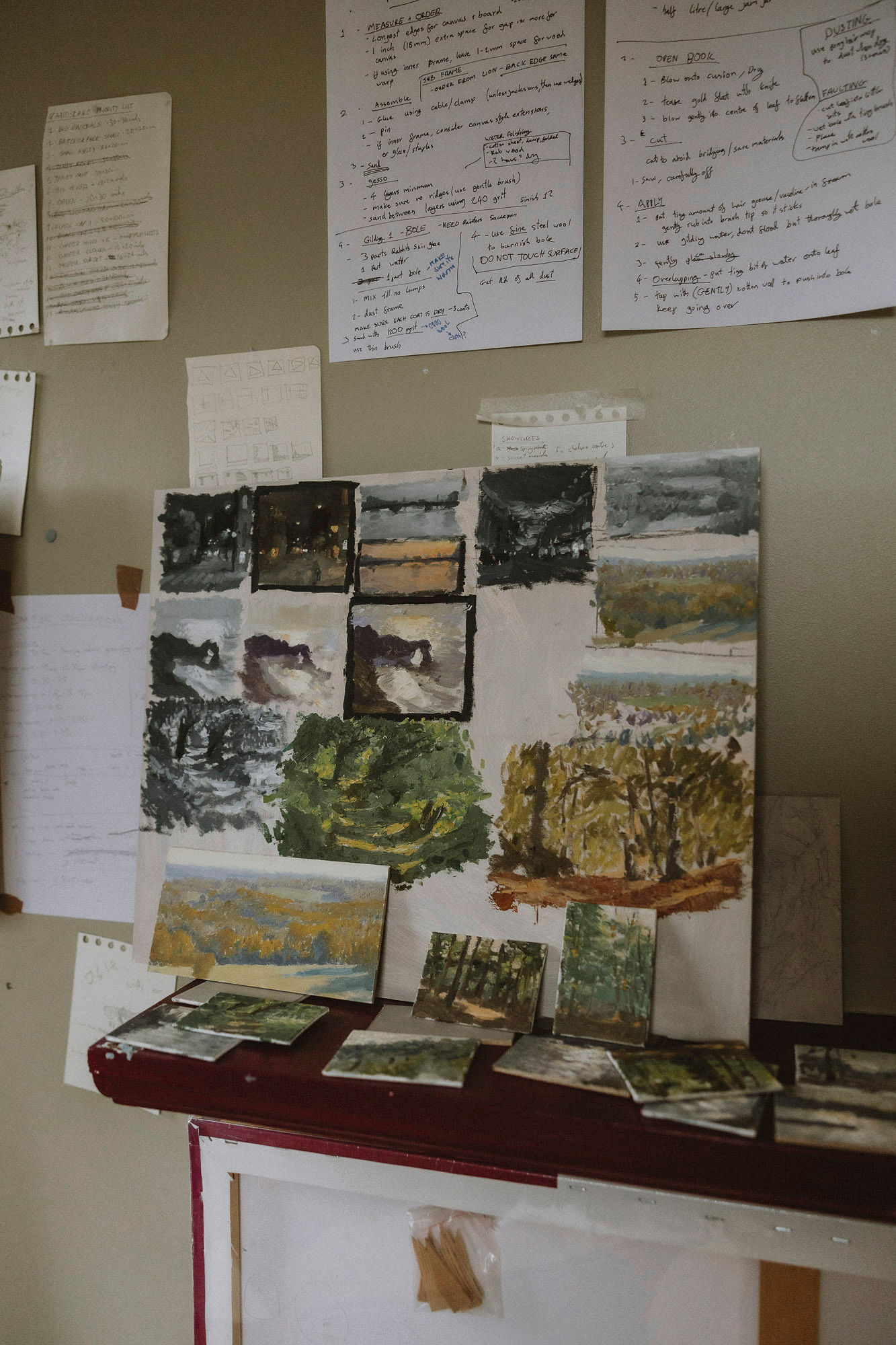
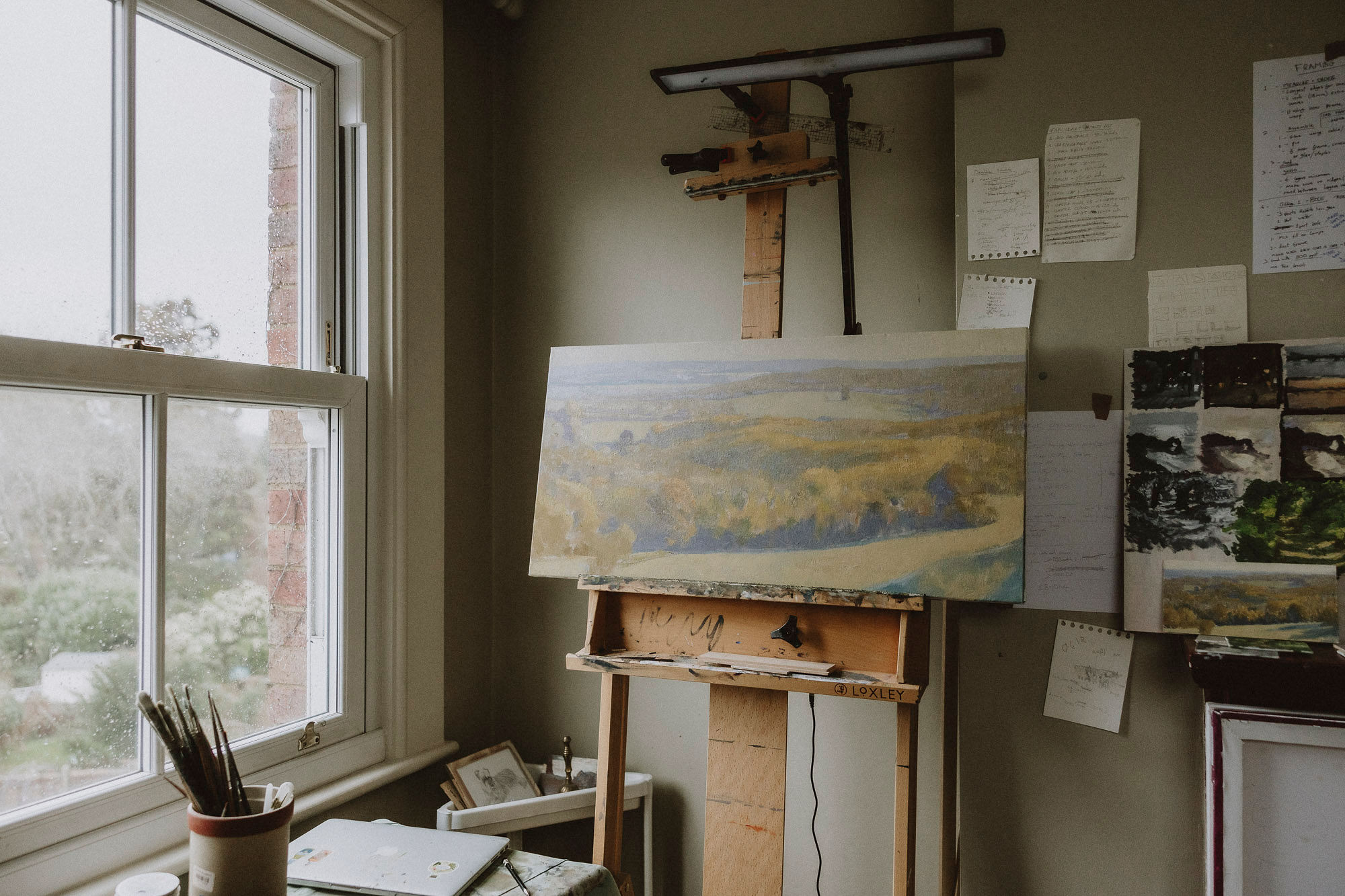
I’m primarily a landscape painter, but I would say I paint moods more than anything. I’d say my work is quite quiet and that’s probably because I spend a lot of time just planning the works. There’ll be the initial inspiration of the scene, and then there’ll be five or six different stages of trying to refine it into a painting. Then the painting sort of happens and that takes however long it may take. It could be days; it could be months. But it’s a bit like going skydiving in a way. You sort of prepare, as much as you possibly can and then the blank canvas is the moment that you’re sitting on the edge of the plane. You then sort of throw yourself out of it.
Can you take us back to the first moment you remember realising painting mattered to you?
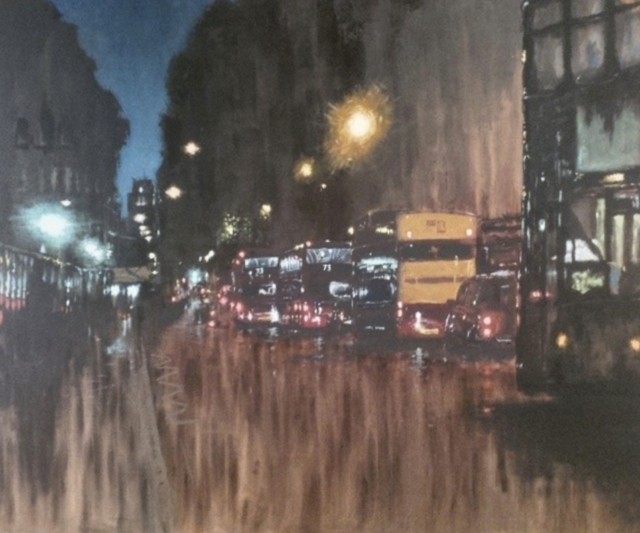
It was in Sevenoaks School. I was 16 at this point and I was doing a painting of Moscow because I’d been on a school history trip to Russia. I just remember being able to suddenly connect the mood that I was feeling at the time with this painting that was a completely unrelated object to anything that I was feeling. That was the first moment that I thought something like a cityscape or a landscape, could connect to someone’s feelings.
How did your time at Sevenoaks School shift how you saw yourself as an artist?
During a French lesson, my teacher, Mr Coquelin burst through the door with his arms up in the air saying, “Oh my God!” He told us he’d seen this painting that had completely blown him away, and I suddenly realised that he was describing my painting. That was the first time anybody had ever offered to buy any of my works.
What happened to that painting?
Eventually that painting was sold through a gallery in Sevenoaks to a stranger and was my first piece to ever sell. That moment with my teacher stuck with me and changed my way of thinking.
You went on to study Architecture at Cardiff University, but how did you decide to give everything to painting?
I think every artist knows that it’s not the sort of career that you can just say, “I’m going to be an artist now” and you have a salary. It’s a slow build up to making something that’s sustainable. After leaving university I had to make a choice of whether it was going to be architecture or art.
What did those early years of committing to painting look like?
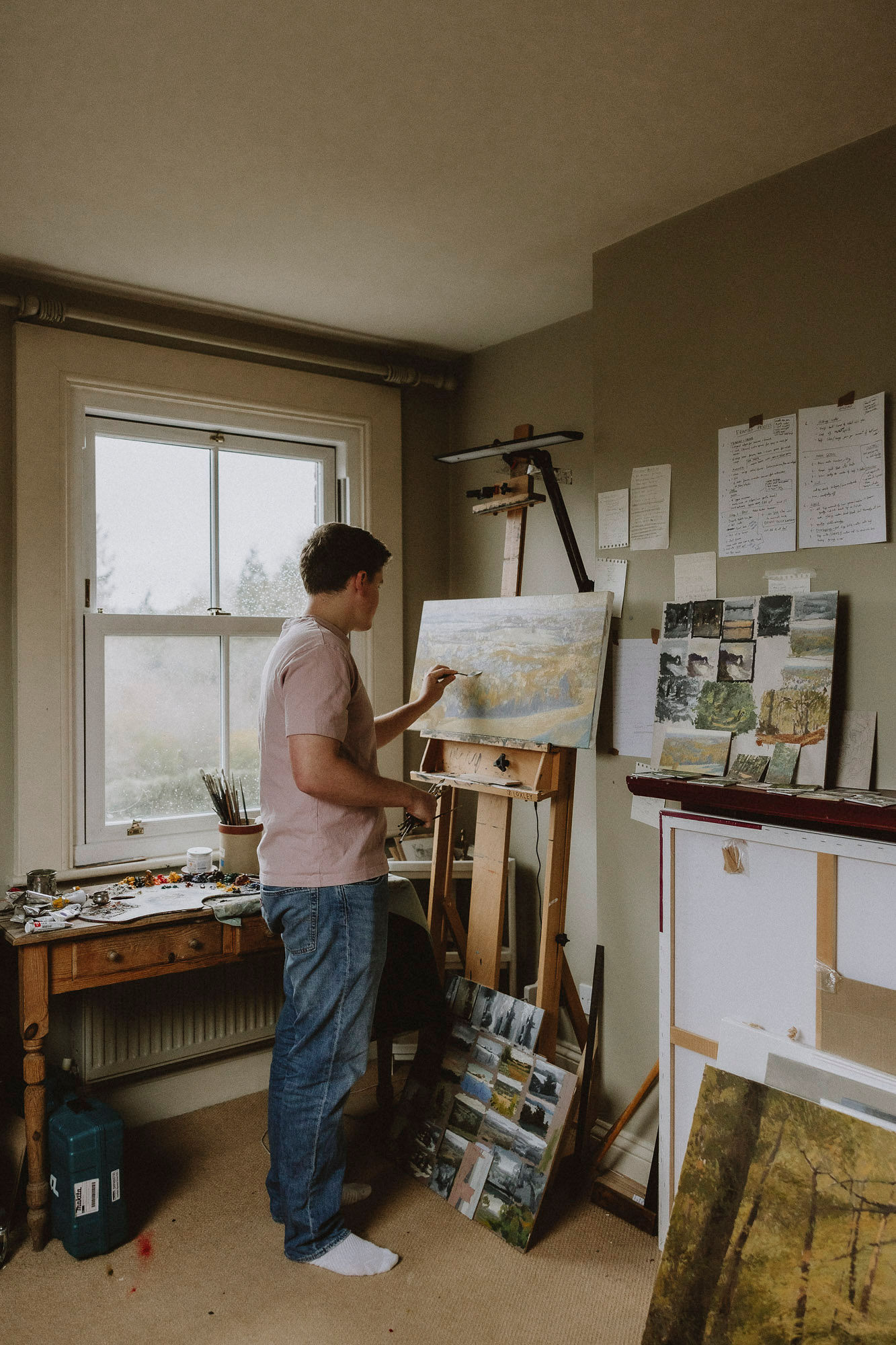
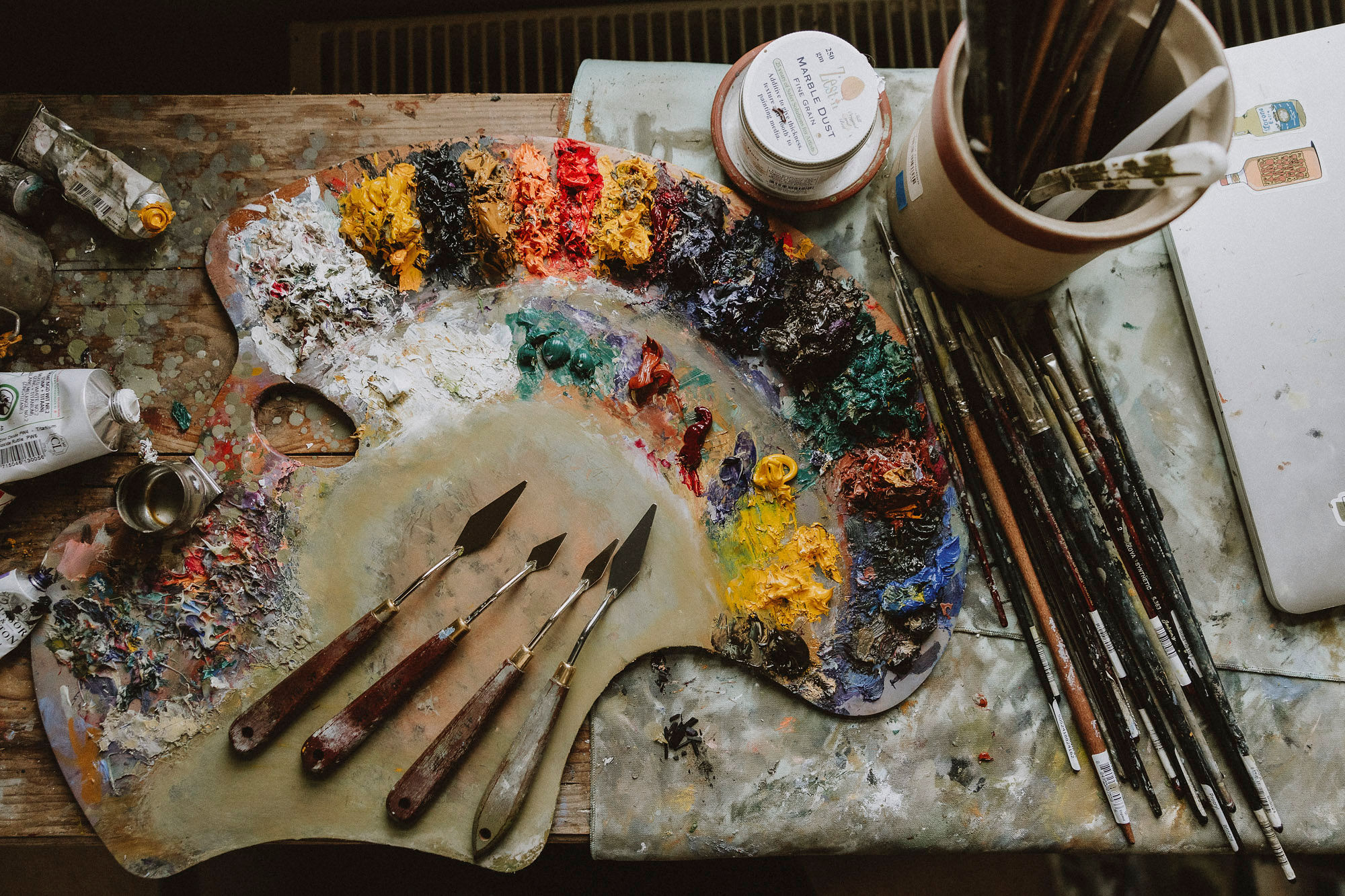
The night before, I would pack my easel, boards to paint on, paints, mediums, everything in the backpack. I’d wake up, put on these very dirty painting clothes, have breakfast and leave. I would paint six to eight paintings in a day until it got dark. Then I’d come home and examine them. And hopefully I’d be happy with one or two.
Have you ever had a painting that just didn’t work?
All the time! I remember the first time it happened because it was such a shock. I think I was 18 and doing a painting of London and it just didn’t work at all. I picked it up and I literally took it outside and it was pouring with rain. I just left it in the rain. For weeks.
How has your response to similar situations changed?
I just put it to the back of the studio and lean it against the wall. It’s less violent now.
Sometimes you can resurrect it and sometimes things are just better left as a study.
Is there a part of the process you find most uncomfortable?
Just the painting itself. The process of planning and exploring and looking at things is very relaxing because it’s inconsequential. Towards the very end, I’d say that’s the most uncomfortable bit because you feel like you could undo all the work you’ve done. In the end I feel I’m playing a chess game where my opponent is the painting and I’m trying to beat it in a way.
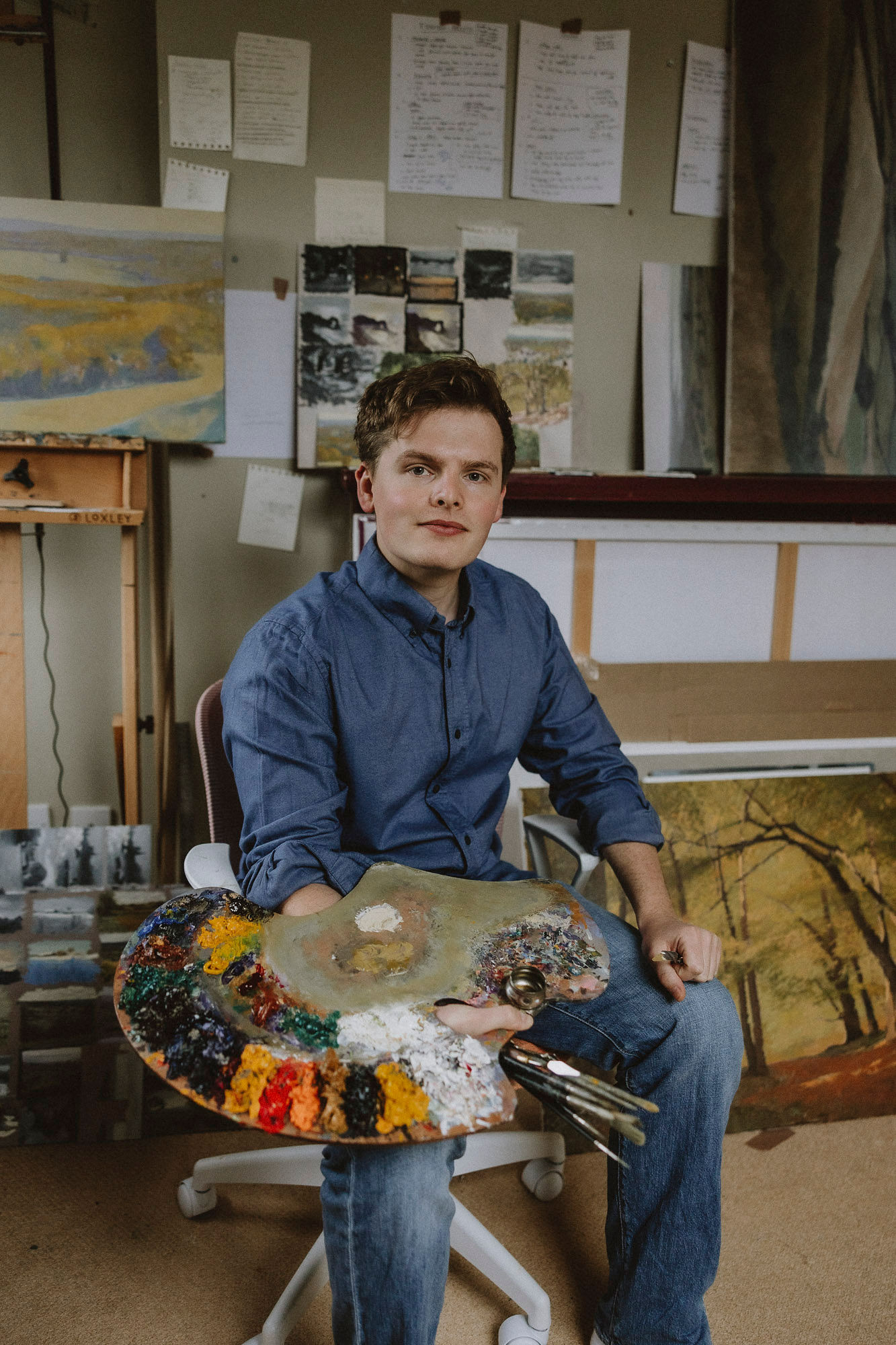
In 2025, aged 27, you were elected to the Royal Institute of Oil Painters. What was that moment like?
It was nerve-racking for days leading up to the announcement. I knew that I would find out either way on 17 December. But I was woken up by the phone call. The President of the Royal Institute of Oil Painters, Adebanji Alade, called me, and he is the most energetic man you’ll ever meet. He was shouting down the phone at 7am, “Well done! How do you feel?”
Did joining the ROI change how you see yourself as an artist?
It wasn’t about suddenly thinking, oh I must be amazing. The lasting feeling was that I might be useful to someone who’s now in the position I was in five or six years ago. As I was looking up to those artists, someone might be looking up to me.
What does success look like to you now?
The definition of success for me is not going to be achieved until I’m much older because it’s just to never stop painting and to still be doing this when I’m seventy or eighty. That would be success.